
Restaurant food can be wonderful in Sicily.
I am not here to tell you otherwise. Palermo has trattorie, bakeries, street food stalls, seafood restaurants, pastry shops, and places where one plate of pasta can make you very quiet for a minute.
But Sicilian home cooking is a different thing.
It is not always prettier. It is not always faster. It is not designed to impress strangers every night. Home cooking lives by another logic: what is in season, who is coming, what needs using, what your grandmother taught you, what your hands know without measuring.
If you want to understand Sicilian food deeply, you need both. Eat in restaurants, yes. But also learn what happens in a home kitchen.
That is where many dishes make their real sense.
Home cooking starts before the recipe
In a restaurant, a dish begins on the menu.
At home, it begins earlier. At the market, in the fridge, in yesterday’s leftovers, in the weather, in a phone call from someone saying they might come for lunch.
Sicilian home cooking is flexible because it has to be. Eggplant looks good today, so caponata becomes possible. Sardines are fresh, so pasta con le sarde comes into the conversation. The tomatoes are too ripe, so sauce must happen now, not tomorrow.
This is why home cooks often sound vague when you ask for exact recipes. They are not hiding secrets to be difficult. They are cooking with conditions.
How much flour? Enough for the dough. How long should it cook? Until it smells right. How much vinegar? Taste and see.
I know this can drive visitors crazy. But it is also the wisdom.
Restaurant food repeats. Home food adapts.
A restaurant needs consistency. If you order the same pasta on Tuesday and Friday, it should be recognizable. That is part of the job.
Home cooking does not need to repeat exactly. It responds.
If children are eating, the sauce may be gentler. If an uncle loves chili, there may be more heat. If someone is avoiding meat, the vegetables become the center. If the day is hot, lunch becomes lighter. If there is good ricotta, dessert changes.
This adaptation is not a lack of discipline. It is care.
In a home kitchen, the cook is not only thinking, “What is the dish?” The cook is thinking, “Who is at the table?”
That question changes everything.
Timing matters more than decoration
Restaurant plates often care about presentation. They should. A professional kitchen thinks about shape, color, height, garnish, and the moment the plate reaches you.
At home, timing is more intimate.
Is the pasta ready when everyone has sat down? Has the caponata rested long enough? Is the fried food still hot? Did the sauce have time to soften? Has the bread arrived from the bakery?
Some Sicilian dishes are not at their best immediately. Caponata is better after resting. Many sauces deepen when they sit. Certain flavors need time to stop being separate and become one thing.
Home cooking understands this because nobody is trying to turn the table quickly.
A Momento Patrizia
My nonna used to make caponata in the morning and then tell us not to touch it. This was torture, because the smell filled the kitchen. I once asked why we could not eat it hot, and she said, “Because now it is still arguing.”
She meant the vinegar, sugar, eggplant, celery, and tomato had not yet made peace. That is home cooking: knowing when food needs silence.
Home cooking uses humble intelligence
Many Sicilian dishes come from making something generous out of little.
Breadcrumbs instead of cheese. Vegetables stretched with pasta. Leftover bread turned useful. A small amount of fish giving flavor to a whole pot. Herbs doing work that expensive ingredients could not.
This is not romantic poverty. It is practical intelligence.
In restaurants, these dishes may become refined. At home, you feel their original purpose more clearly. They were made to feed people well, not to show off.
Take pasta with breadcrumbs. In a restaurant, it may arrive beautifully balanced. At home, you understand the gesture: toasted bread giving crunch, flavor, and dignity where grated cheese was once too expensive or simply not right for the dish.
That is Sicilian cooking at its best. Clever, direct, never wasteful.
The table is part of the recipe
In Sicily, a meal is rarely only about eating.
It is conversation, advice, interruptions, someone telling you to take more, someone else saying the pasta needs one more minute, a cousin arriving late, a neighbor sending lemons, a child refusing something and then eating it when nobody is watching.
Restaurants can give you service. Home cooking gives you participation.
You may help set the table. You may stir a sauce. You may be asked to taste. You may hear the story of why this family makes the dish differently from the family next door.
That is not extra. That is the experience.
Food changes when you understand the hands and voices around it.
Home cooking is less standardized
Ask ten Sicilians how to make the same dish and you may receive twelve answers.
This is normal.
Every town, family, and cook has variations. Some put chocolate in certain sauces. Some never would. Some fry eggplant one way, some another. Some add raisins and pine nuts where others prefer simplicity. People have opinions, and they are often strong.
Restaurant menus sometimes make Sicilian food look fixed. Home cooking reminds you that tradition is alive because people keep arguing with it.
Do not be surprised if someone tells you, “This is the real way.” Smile. It probably is, in their house.
Restaurant food can teach you what to look for
I do not want to make restaurants sound less important. A good restaurant can teach you a lot.
It can show you excellent ingredients, professional technique, regional dishes you might not meet at home, and combinations that feel old and new together. It can also give you pleasure without asking you to wash a single pan, which is not a small thing.
When you eat out in Sicily, notice balance. Sweet and sour. Soft and crunchy. Sea and land. Fresh herbs and fried richness. Citrus cutting fat. Bitter greens beside something sweet.
Then, if you cook later, these memories help your hands.
Restaurant food can introduce the language. Home cooking helps you speak it.
Why cooking classes feel different from dinner out
In a cooking class, you get access to the part usually hidden.
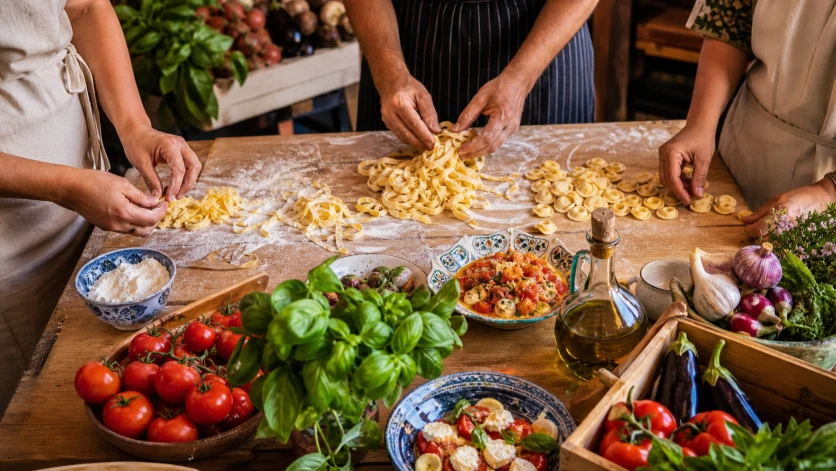
You see the before. The raw eggplant, the stiff dough, the sauce that tastes too sharp before it settles, the breadcrumbs before they turn golden. You see mistakes corrected. You learn that texture matters more than a written time.
This is why I like teaching home cooking. I am not trying to make people into chefs in one afternoon. That would be silly. I want people to understand how Sicilian dishes think.
Once you understand the thinking, you can return home and adapt. Your tomatoes will be different. Your flour may behave differently. Your kitchen will not smell exactly like Palermo. Still, you will know what you are aiming for.
That is more useful than copying a recipe perfectly once.
What to look for in real Sicilian home cooking
Look for seasonality. If everything is available all year, something is wrong.
Look for simplicity with confidence. Many dishes do not need twenty ingredients.
Look for a cook who tastes and adjusts. Recipes are guides, not police.
Look for stories, but not performance. The best food memories often come in small comments, not grand speeches.
Look for generosity. Not necessarily huge portions, though that happens too. I mean generosity of attention: someone noticing what you like, explaining a step, offering the best piece, pouring a little more wine.
This is the heart of Sicilian home cooking.
My honest advice
Eat in restaurants. Eat street food. Go to bakeries. Taste everything you can.
But if you want to understand Sicilian food in your body, cook with someone local at least once. Stand near the stove. Ask questions. Taste before and after. Notice how a dish changes with time.
You may remember a restaurant plate because it was perfect. You may remember a home-cooked meal because you were part of it.
Both memories matter. They just live in different places.
If you want to learn Sicilian home cooking in Palermo, my cooking classes are built around that difference: hands-on, seasonal, and made to end at the table. And if you prefer to experience the food without cooking first, a Palermo food tour is a good way to taste the city outside before coming inside the kitchen.